
A City That Gathered Around Beer
Ask people what drink belongs to Amsterdam and most will probably mention coffee. It is easy to understand why. The city is full of cafés, terraces and coffee bars where conversations begin, plans are made and afternoons disappear a little faster than expected.
A few centuries ago, however, Amsterdam gathered around something entirely different.
Before coffee arrived in large quantities through Dutch trade routes, before cafés became fixtures of city life and long before oat milk became a menu option, beer was the drink that accompanied everyday life in Amsterdam. It was served at breakfast, poured with lunch and appeared again at dinner. Not because people were constantly celebrating, but because beer was woven into daily life in a way that is difficult to imagine today.
To understand why, you have to look at the city itself.
Water Everywhere, But Not Always for Drinking
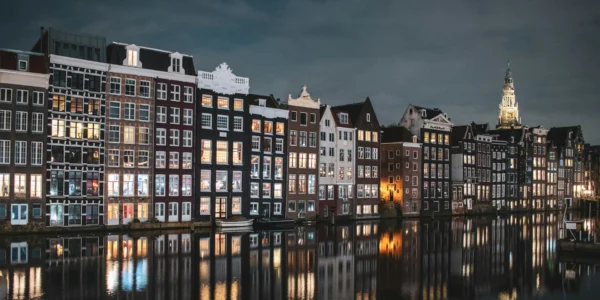
Amsterdam has always been defined by water. The canals that now attract photographers and boat tours were once the city’s highways, carrying goods, people and trade through a rapidly growing port. They were practical, busy and essential to daily life.
They were not always ideal sources of drinking water.
As Amsterdam expanded, access to clean water became increasingly complicated. Wealthier households could sometimes afford better sources, but for much of the population beer was often the safer and more reliable option. The beer people drank was very different from the stronger beers we know today. Much of it contained only a small amount of alcohol and was brewed specifically for everyday consumption.
For many households, a mug of beer at breakfast was not unusual. It was simply part of the routine.
Seen from that perspective, the question is not why Amsterdammers drank beer. The question is why they would have chosen anything else.
The Brewers Who Helped Build the City
The popularity of beer created an industry that became deeply connected to Amsterdam’s growth. By the late Middle Ages and into the Golden Age, breweries could be found throughout the city. Grain arrived through trading networks, brewers transformed it into beer and taverns sold it to a population that seemed more than happy to keep drinking it.
Beer was not a luxury product reserved for special occasions. It was a staple. Workers drank it. Sailors drank it. Merchants drank it. Even children often consumed lighter varieties.
In many ways, brewing reflected the practical nature of Amsterdam itself. The city has always appreciated things that serve a purpose. A product that was affordable, widely available and useful in daily life fit perfectly into that mentality.
The result was a thriving brewing culture that supported jobs, trade and social life all at once.
The Tavern Was Amsterdam’s Living Room
Perhaps the most interesting part of the story is not the beer itself, but where it was consumed.
Long before modern cafés existed, Amsterdam was filled with taverns, inns and alehouses. These places offered much more than a drink. They were meeting places where travellers could find a bed, merchants could discuss business and neighbours could catch up on the latest news.
In a growing city, they became important social spaces. Deals were made over beer. Friendships were maintained over beer. Stories were exchanged over beer.
If that sounds familiar, it is because the basic idea has never really disappeared.
The drinks have changed. The furniture has improved. The heating is certainly better. But the reason people gather remains remarkably similar.
Human beings have always looked for places where they could sit together, eat something, share a drink and spend time in good company.
When Coffee Arrived
Everything began to shift during the seventeenth and eighteenth centuries. Through Dutch trade routes, coffee and tea became increasingly available. What had once been rare imports slowly became part of everyday life.
Amsterdam embraced coffee enthusiastically. Coffee houses appeared and new habits developed around them. Gradually, coffee took over the role beer had once played during the early hours of the day.
Beer did not disappear, of course. It simply moved to a different moment.
Instead of starting the day with it, people increasingly ended the day with it.
The drink changed position, but the ritual remained.
What Amsterdam Really Kept
Looking back, the story of beer in Amsterdam turns out to be about more than brewing. It is a story about how a city gathers. About the places where people met, talked, argued, celebrated and found company after long days of work.
Coffee eventually replaced beer as the city’s favourite morning drink. New foods arrived. New traditions followed. Amsterdam continued doing what it has always done: adapting, changing and welcoming influences from elsewhere.
Yet something remained remarkably constant.
Whether it was a mug of beer in a seventeenth-century tavern, a cup of coffee in a neighbourhood café or a drink shared at the end of a long day, people kept finding reasons to sit down together.
Perhaps that has always been Amsterdam’s real tradition.
Not the drink itself.
The table around it.