
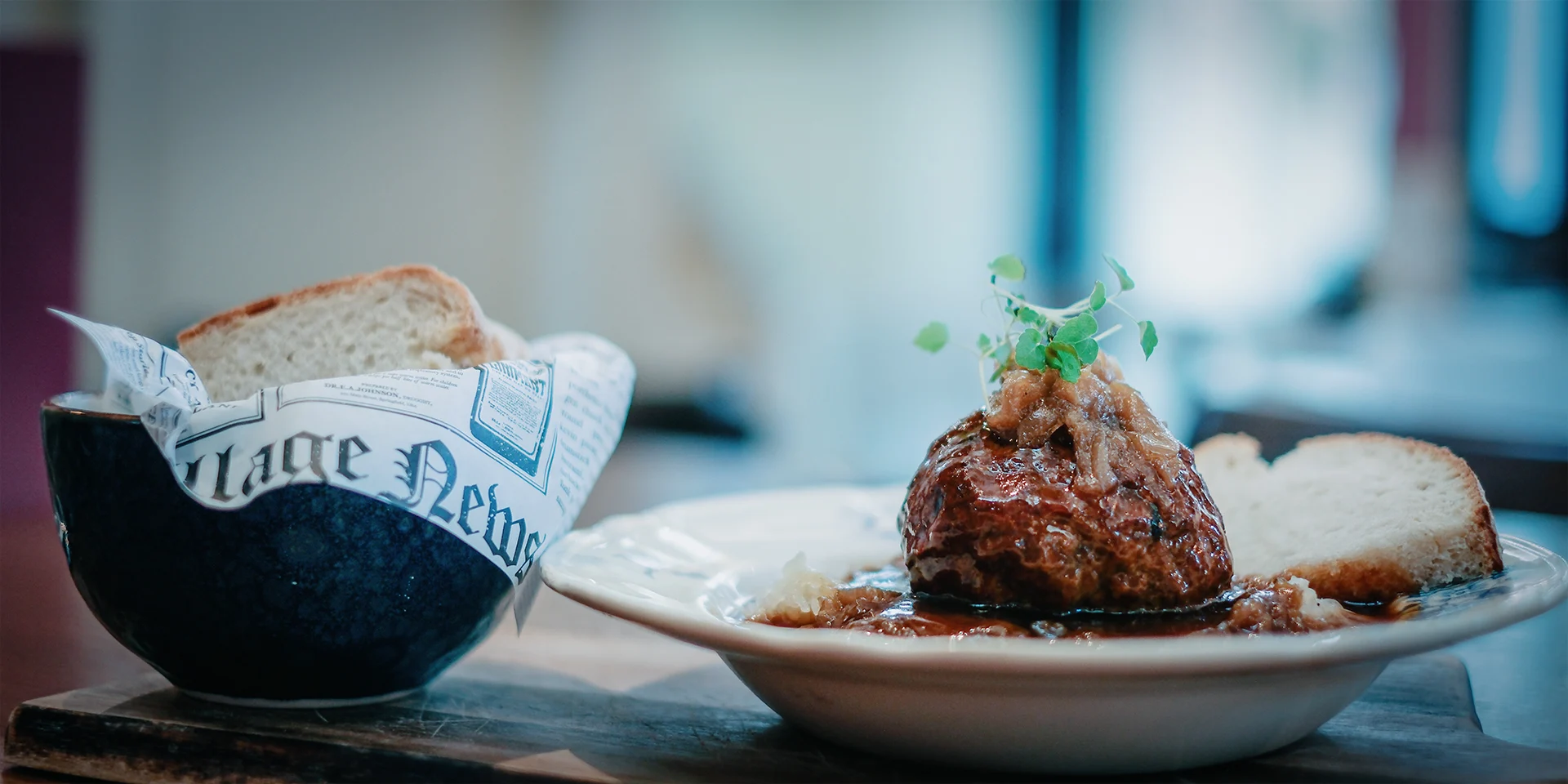
There are shrimp in our meatballs. And no, the chef didn’t make a mistake.
The traditional Jordaan meatball, or Jordanese gehaktbal, combines minced meat with small Dutch North Sea shrimp. Today, when shrimp are more likely to appear in a seafood restaurant than inside a meatball, it sounds like an unusual culinary experiment. In the old Jordaan, however, the combination made considerably more sense.
To understand why, we have to go back to a very different Amsterdam, when the Jordaan was one of the city’s poorest working-class neighbourhoods and nothing edible was casually thrown away.
When Shrimp Were Poor Man’s Food
It is easy to forget that food changes status. Ingredients we consider luxurious today were not necessarily luxurious a century ago, and Dutch shrimp are a perfect example.
The tiny shrimp caught along the Dutch coast were once inexpensive food. Meat, meanwhile, was something many working-class families could not afford to put on the table every day. Stretching a small amount of meat with cheaper ingredients was therefore simply sensible cooking.
And in the Jordaan, shrimp were particularly close to home.
Women in the neighbourhood earned extra money by peeling enormous quantities of them. The work could be done at home and fitted around running a household and looking after children. Bowls of unpeeled shrimp arrived, nimble fingers did the work, and the valuable peeled shrimp went back to the trader.
Not every shrimp survived the process looking quite so pretty.
According to the old Amsterdam story, broken shrimp and leftovers were sometimes kept rather than discarded. Mixed into minced meat, they stretched an expensive ingredient while adding flavour at the same time. Somewhere in that practical, frugal kitchen culture lies the story of the Jordanese gehaktbal.
Amsterdam Even Had a Shrimp Church
The connection between the Jordaan and shrimp went far enough to leave its mark on the neighbourhood itself.
Amsterdam had a place known as the Garnalenkerk, literally the Shrimp Church. The nickname became associated with the women who peeled shrimp there, an almost wonderfully Amsterdam combination of religion, work and getting on with whatever needed doing.
It tells us something important about life in the old Jordaan. Work did not necessarily happen somewhere neatly separated from home and family life. People earned money wherever they could, and peeling shrimp became part of the everyday rhythm of the neighbourhood.
Once you know that, shrimp turning up in a meatball suddenly feels considerably less strange.
A Meatball Born from Making Do
There is no single surviving recipe that allows us to point to one Jordaan kitchen and announce: this is where somebody invented it. The history of everyday food rarely works that neatly. Recipes made in ordinary homes were passed between families, adapted to whatever was available and, unlike grand cookbooks, often never written down at all.
What survives is the tradition and the story behind it: meat was relatively expensive, shrimp were cheap and plentiful, and the women of the Jordaan peeled them as paid work. Culinary writer Johannes van Dam later recorded a version of the Jordanese meatball using Hollandse garnalen, and the tradition is still kept alive by Amsterdam butchers such as Slagerij Louman, whose version combines pork and beef with a generous amount of Dutch North Sea shrimp.
What began as practical cooking has therefore become something rather special: a dish that tells you something about the neighbourhood it came from.
From Poor Man’s Food to an Amsterdam Classic
There is a lovely bit of irony in the story. The ingredient once used because it was cheap is now the ingredient that makes the meatball unusual.
Dutch North Sea shrimp are no longer humble filler. They are prized for their delicate, slightly sweet flavour and command a very different price from the shrimp peeled by Jordaan women generations ago. Yet put them back into minced meat and an old piece of Amsterdam food culture suddenly reappears.
That is why our Jordaan meatball belongs on the menu at ’t Westerhuys. Not because it is fancy and certainly not because somebody recently decided that surf and turf meatballs sounded like a good idea. It belongs there because it comes from the same kind of Amsterdam kitchen we love telling stories about: practical, resourceful and very reluctant to waste perfectly good food.
And somehow, after all these years, shrimp in a meatball still works.